Brushless DC Motors represent a significant advancement in motor technology. Unlike traditional motors, these operate without brushes, which are often a source of wear and tear. The elimination of brushes enhances efficiency and durability. A Brushless DC Motor maintains a smooth operation, reducing noise and vibration, making it suitable for sensitive applications.
Understanding how these motors work can seem daunting. However, their fundamental principle is straightforward. They utilize electronic controllers to manage the power supplied to the motor. This innovation leads to precise control of speed and torque. Users appreciate these features in various industries, from automotive to robotics.
Despite their benefits, it's essential to acknowledge potential challenges. Implementing Brushless DC Motors can require a higher initial investment. Additionally, the complexity of their control systems may pose a learning curve. Users must weigh these factors against the long-term savings and performance improvements. Adopting this technology can revolutionize many applications, but careful consideration is necessary.
What is a Brushless DC Motor?
A brushless DC motor is a type of electric motor that operates without brushes. Unlike traditional motors, which rely on mechanical brushes to transfer current, brushless motors use electronic commutation. This leads to higher efficiency and longer lifespan. Brushless motors are found in many applications, like drones, electric vehicles, and home appliances.
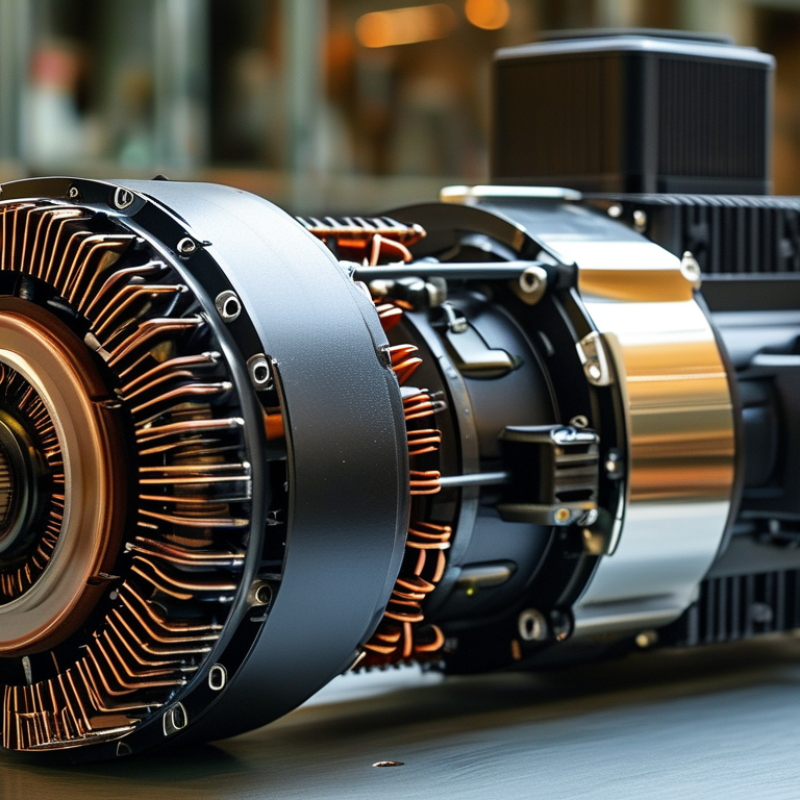
The internal structure of a brushless DC motor typically includes a rotor and a stator. The rotor is usually made of permanent magnets, while the stator has coils of wire. When current flows through the coils, it generates a magnetic field that interacts with the rotor magnets. This interaction creates rotation. The absence of brushes minimizes wear and tear, making these motors more reliable.
However, brushless DC motors can be complex. They require a controller to manage the electronic commutation. This adds cost and may complicate installation. Some users might struggle with troubleshooting. Understanding their operation is key to maximizing efficiency. In the right application, a brushless motor outperforms its brushed counterpart in power and efficiency while demanding less maintenance over time.
What is Brushless DC Motor and How Does It Work?
| Dimension |
Description |
| Type |
Brushless Direct Current Motor (BLDC) |
| Construction |
Stator with windings and a rotating rotor with permanent magnets |
| Key Advantages |
Higher efficiency, longer lifespan, lower maintenance, quiet operation |
| Control Method |
Electronic commutation using sensors or sensorless methods |
| Applications |
Electric vehicles, computer hard drives, HVAC systems, robotics |
| Torque Characteristics |
High torque at low speeds, increasing torque output with speed |
| Typical Efficiency |
80% to 90% efficiency range |
Key Components of Brushless DC Motors
Brushless DC motors (BLDC) are intricate machines with various key components working in harmony. A driving force behind their efficiency, the stator features coils arranged in a specific pattern, generating a magnetic field. According to industry reports, the stator's design greatly influences motor performance and efficiency, making it a critical element. The rotor, typically made of permanent magnets, interacts with this magnetic field. This setup allows for smoother and more efficient operations, as it eliminates brushes that can wear out over time.
Another crucial component is the electronic speed controller (ESC). This device regulates the motor's speed and torque by adjusting the power delivered to the motor windings. Reports indicate that using a high-quality ESC can improve motor efficiency by up to 30%. However, the complexity of the ESC can also present challenges. Improperly calibrated controllers can lead to overheating or reduced performance, pointing to the need for careful tuning.
Integrating these components offers significant advantages, such as increased lifespan and reduced maintenance. Industry data highlights that BLDC motors can achieve an efficiency rating up to 90%, surpassing traditional brushed motors. However, the initial setup cost and complexity can deter some users, requiring a balance between investment and long-term benefits. Understanding these key components aids in better implementation and troubleshooting in various applications.
Working Principle: How Brushless DC Motors Operate
Brushless DC motors operate on a straightforward yet effective principle. Unlike traditional motors, they use electronic controllers instead of brushes to achieve rotation. This design enhances efficiency and reduces wear and tear. The absence of brushes results in less friction, which allows for smoother and quieter operation. But, achieving this efficiency requires precise electronics to manage the motor’s performance.
To understand how they work, consider the rotor and stator setup. The rotor is the rotating part, while the stator remains static. The stator generates a magnetic field using coils. When the field is activated by the electronic controller, it causes the rotor to move. This interaction between magnetic fields drives the motor. However, the alignment between the rotor and stator must be accurate. Any misalignment can lead to performance drops or overheating.
Control systems play a crucial role in operating brushless DC motors. These systems monitor parameters like speed and torque. A well-tuned controller adjusts electrical input based on demand. Yet, calibrating these systems requires expertise. Inaccurate calibration can lead to inefficiency or even system failures. Mastering these technologies can take time and practice, highlighting the complexity behind the simplicity of brushless DC motors.
Advantages of Brushless DC Motors Over Traditional Motors
Brushless DC motors (BLDC) have gained popularity for their efficiency and reliability. Unlike traditional brushed motors, BLDC motors use electronic controls, enhancing performance. This not only reduces maintenance but also extends the product lifespan.
According to a report by Allied Market Research, the global brushless DC motors market is projected to reach $25 billion by 2027. This growth stems from their high torque-to-weight ratio and lower energy consumption. These motors can be up to 90% efficient, considerably outperforming their brushed counterparts. In addition, they produce less noise and vibration, making them ideal for applications where precision is paramount.
Tips: When selecting a motor, consider your application’s power requirements. Higher efficiency translates to lower operational costs. Also, factor in heat dissipation, as excessive heat can affect performance.
Another advantage lies in their ability to deliver consistent power. This makes brushless motors suitable for high-precision applications like robotics. However, they may not always be the best choice for simpler designs. Budget constraints might lead some to opt for traditional motors instead. While BLDC motors excel in many areas, there are scenarios where they might not be justifiable in cost or complexity.
Applications and Industry Utilization of Brushless DC Motors
Brushless DC motors (BLDC) are gaining traction across various industries due to their efficiency and reliability. These motors are essential in applications like electric vehicles, drones, and industrial automation. In the automotive sector, BLDC motors are used in electric power steering and electronic throttle control. This versatility enhances vehicle performance while reducing energy consumption.
In the automation realm, these motors power conveyor systems and robotics. Their precision control allows for improved accuracy in manufacturing processes. Additionally, they find utility in HVAC systems, providing quiet and efficient operation. However, challenges still exist. The complexity of their electronic control can lead to issues in maintenance and repairs. As industries continue to adopt these motors, finding solutions to their drawbacks will remain a priority.
FAQS
: They use electronic controllers instead of brushes for rotation. This design improves efficiency and reduces wear.
The rotor rotates while the stator generates a magnetic field. This interaction drives the motor's performance.
Misalignment can cause performance drops or overheating, affecting overall efficiency and longevity.
They track speed and torque, adjusting electrical input based on demand. Proper calibration is crucial.
They offer high efficiency, lower noise, and reduced maintenance compared to traditional motors.
These motors see use in electric vehicles, drones, industrial automation, and HVAC systems.
Evaluate power requirements, efficiency, and heat dissipation to ensure suitability for your application.
Yes, their electronic controls can complicate maintenance and repairs, which may pose challenges.
Not necessarily; budget constraints and simpler designs may favor traditional motors over BLDC ones.
Achieving high precision requires expertise, and mismanagement can lead to inefficiencies or failures.
Conclusion
A Brushless DC Motor is an electric motor that operates without brushes, utilizing electronic control instead to drive the rotor. Its key components include the stator, rotor, and a control system, which work together to enable efficient operation. The working principle involves using an alternating magnetic field created by the stator to rotate the rotor, resulting in smooth and reliable performance compared to traditional brushed motors.
One of the main advantages of Brushless DC Motors is their increased efficiency and reduced maintenance due to the absence of brushes, which can wear out over time. This makes them ideal for various applications across industries such as robotics, electric vehicles, and consumer electronics, where reliability and longevity are crucial. Their growing popularity highlights the transition towards more advanced motor technologies in modern applications.
