Choosing a Motor Controller supplier is not simply a pricing exercise. It is a decision about efficiency, safety, service, and long-term system stability. Buyers must compare manufacturers across electric vehicles, industrial machinery, robotics, marine equipment, and renewable-energy systems.
A reliable controller should manage torque smoothly, protect against overheating, and communicate accurately with batteries, sensors, and drives. Small details matter. A loose connector, delayed firmware update, or poorly matched current rating can stop an entire production line. Field experience often reveals what brochures omit.
As power-electronics expert John M. Miller has noted, “Efficiency is not a single number; it depends on the operating point.” That observation remains practical for global buyers. A controller performing well at low speed may lose efficiency under heavy loads. It may also require different cooling in humid factories or high-altitude installations.
This guide examines leading Motor Controller manufacturers by product capability, application coverage, customization, technical support, and international supply experience. It considers established brands alongside specialist companies with strong niche expertise. Certifications and test data matter. So do response times, documentation quality, and replacement-part availability.
No supplier is perfect. Some offer advanced software but limited regional support. Others provide rugged hardware with less flexible programming. Buyers should question marketing claims and request application-specific evidence. Thermal graphs. Fault logs. Real installation references.
The right choice depends on the machine, not the logo. A careful comparison can reduce downtime, improve energy use, and prevent expensive redesigns. However, this overview should support technical evaluation, not replace it. Independent testing remains essential before final procurement.
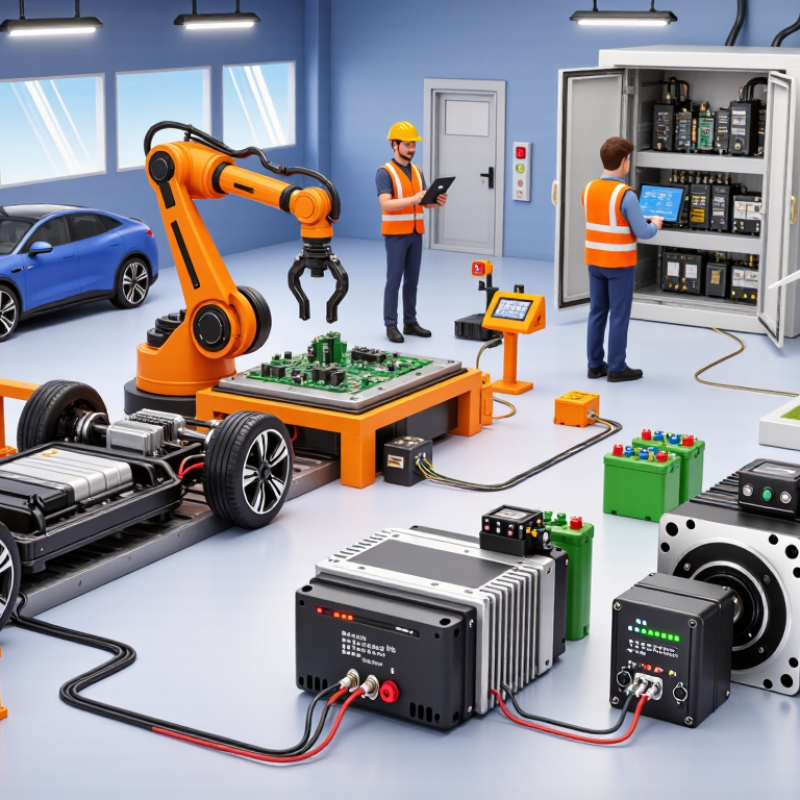
Top Motor Controller Manufacturers for Global Buyers
A motor controller regulates how electrical energy reaches a motor. It manages speed, torque, direction, acceleration, and braking. In a compact machine, it acts like the motor’s operating command center. The difference is practical. A suitable controller can reduce heat, protect components, and improve motion accuracy.
Global buyers need motor controllers because machines operate under different voltages, climates, and safety requirements. A controller designed for one market may not fit another power system. Buyers should check rated voltage, continuous current, peak current, cooling method, feedback support, and communication interfaces. They should also review documentation, testing records, warranty terms, and replacement availability. These details matter during installation, especially when technical support is several time zones away.
In supplier evaluations, I have found that impressive specifications do not always guarantee reliable field performance. A controller may support high current but require better ventilation than the machine provides. Another model may offer advanced software but lack clear fault codes. Not always. Buyers should request sample units, test them under real loads, and examine temperature changes over time. Factory quality controls, traceable components, and consistent production records also reveal a manufacturer’s reliability. I would not ignore small concerns, such as unclear manuals or slow answers. They often become expensive problems after shipment.
Motor controllers translate electrical commands into controlled motion. For global buyers, the right type depends on motor design, load, and operating environment. Brushed DC controllers remain practical for pumps, small conveyors, and battery-powered equipment. Brushless DC controllers provide efficient, low-maintenance operation in fans, scooters, and compact machines. AC controllers suit industrial motors, especially where adjustable speed and robust torque matter. Servo controllers add closed-loop precision for robotics, packaging, and CNC equipment. Each option has trade-offs. Cheap selection often becomes expensive later.
Important features should match actual working conditions. Check rated voltage, continuous current, peak current, and thermal limits. A controller may survive a short overload but fail beside a hot motor. Feedback support improves speed and position control. Hall sensors, encoders, and sensorless algorithms serve different accuracy and cost needs. Interfaces such as CAN, RS-485, or industrial Ethernet simplify machine integration. Protection against overcurrent, overheating, and stalled rotors improves reliability. Do not trust a high laboratory rating alone. Airflow, cable length, vibration, and dust can change performance. This is where specifications meet experience.
Application details should guide procurement more than catalog language. A warehouse conveyor needs steady starting torque and simple maintenance. A medical actuator requires quiet movement, controlled acceleration, and documented quality checks. Outdoor mobility equipment may need sealed housing, regenerative braking, and wide temperature operation. Buyers should request test data, wiring guidance, and support for local compliance requirements. Comparing only purchase price is a weak habit. Lifecycle cost includes commissioning time, energy use, replacement access, and downtime. Some choices remain uncertain until field testing begins. A pilot installation can reveal noise, heat, or tuning problems before full deployment.
Top Motor Controller Manufacturers for Global Buyers
How to Evaluate Motor Controller Manufacturers Worldwide
Evaluating motor controller manufacturers requires more than comparing prices and product pages. Start with manufacturing experience, engineering capability, and traceable quality systems. Ask how long the factory has produced controllers for similar voltage, current, and duty cycles. Request audit records, inspection procedures, and independent test reports. A polished website is not evidence.
Examine the controller’s real operating limits. Check continuous current, peak current, thermal performance, enclosure protection, electromagnetic compatibility, and software support. Ask for test data from conditions resembling your application, such as a 48-volt system running inside a warm, dusty cabinet. Sample units should complete load, vibration, and temperature tests before volume orders. Engineers should explain failure protection clearly.
Supply reliability matters as much as technical performance. Review component traceability, production capacity, spare-part policies, and response times across different time zones. Confirm whether firmware changes require approval and whether service records remain available. Speak with previous industrial customers when possible. Their comments often reveal more than prepared presentations.
Pricing can hide engineering risk. Low-cost units may require extra testing, redesign, or field support. However, expensive equipment is not automatically dependable. I have seen careful evaluations miss basic connector weaknesses. That is worth remembering. Leave room for pilot orders, corrective actions, and honest technical questions before committing to a global supply agreement.
Top motor controller manufacturers are increasingly separated by technology, not company size. Their portfolios usually cover brushless DC, permanent-magnet synchronous, induction, servo, and traction systems. Each category serves different loads. A compact BLDC controller may suit warehouse rollers, while a regenerative inverter must manage battery voltage, heat, and braking energy. The International Energy Agency reports that motor-driven systems consume roughly half of global electricity. This makes switching efficiency and standby losses commercially important. Silicon-carbide devices can reduce switching losses, but they often increase cost and demand stricter layout control.
Market selection also changes the definition of “top.” Grand View Research valued the global electric motor market at over USD 160 billion in 2023 and expects continued growth through 2030. That expansion supports demand for controllers in industrial automation, electric mobility, HVAC, and renewable-energy equipment. Manufacturers serving global buyers should provide wide input-voltage ranges, documented thermal derating, EMC test evidence, and firmware update procedures. IEC 61800-5-2 is a useful reference for functional safety in adjustable-speed drive systems. Field trials remain essential. A controller can pass a laboratory test yet overheat inside a sealed cabinet at 45°C. Certification alone is not enough. Cost comparisons can also mislead, because cables, filters, cooling hardware, and commissioning time may exceed the controller’s purchase price. Performance data should be checked against the actual motor, load profile, and duty cycle.
| Motor Controller Technology | Typical Motor Type | Common Voltage Range | Control Method | Feedback Requirement | Typical Efficiency | Primary Global Markets | Typical Applications | Key Buyer Considerations |
|---|---|---|---|---|---|---|---|---|
| Brushed DC | Permanent-magnet brushed DC motor | 6–48 V DC in many embedded and vehicle systems | PWM voltage control; optional current limiting | Usually sensorless; Hall or encoder feedback is optional | Approximately 70–90%, depending on load and motor size | Consumer equipment, industrial controls, automotive auxiliaries | Fans, pumps, valves, actuators, small conveyors | Low cost, simple integration, brush life, electromagnetic noise, thermal protection |
| Brushless DC (BLDC) | Permanent-magnet brushless motor with trapezoidal back EMF | 12–96 V DC in common low-voltage systems | Six-step commutation or sinusoidal commutation | Hall sensors are common; sensorless operation is also widely used | Approximately 80–93% in appropriately sized systems | Electric mobility, appliances, HVAC, robotics, renewable-energy equipment | E-bikes, drones, pumps, compressors, cooling fans, power tools | Commutation quality, acoustic noise, startup behavior, current rating, IP protection |
| Permanent-Magnet Synchronous Motor (PMSM) | Interior- or surface-mounted permanent-magnet synchronous motor | 24–800 V DC bus systems, depending on application class | Sinusoidal control, field-oriented control, or direct torque control | Resolver, encoder, Hall sensors, or sensorless estimation | Approximately 90–97% in high-quality industrial or traction systems | Electric vehicles, industrial automation, HVAC, elevators, precision machinery | Traction drives, servo axes, compressors, pumps, machine tools | Position accuracy, resolver compatibility, regenerative braking, cooling, EMC compliance |
| AC Induction | Squirrel-cage three-phase induction motor | 200–690 V AC for many industrial installations | Volts-per-hertz control or sensorless/vector control | Often sensorless; encoder feedback is used for demanding speed control | Approximately 85–96%, depending on motor rating and load | Process industries, water treatment, material handling, buildings, manufacturing | Fans, pumps, compressors, hoists, conveyors, mixers | Supply voltage, overload capacity, braking method, harmonic mitigation, motor insulation |
| Stepper Motor Control | Two-phase or three-phase hybrid stepper motor | 12–80 V DC in common microstepping systems | Constant-current chopper control with full-, half-, or microstepping | Usually open-loop; closed-loop versions add encoder feedback | Approximately 60–85%, with efficiency varying significantly by speed | 3D printing, laboratory equipment, packaging, office automation, light machinery | Linear stages, indexing systems, labelers, scanners, small CNC equipment | Holding torque, resonance control, missed-step risk, microstep resolution, heat generation |
| Industrial Servo | AC servo motor, PMSM, or brushless servo motor | 24–800 V DC bus or 100–480 V AC input classes | Nested current, speed, and position loops with field-oriented control | High-resolution encoder or resolver is normally required | Approximately 90–97% in correctly matched systems | Factory automation, semiconductor equipment, packaging, robotics, machine tools | Robot joints, CNC axes, pick-and-place systems, printing and converting machinery | Bandwidth, settling time, encoder protocol, safety functions, network compatibility, tuning support |
| Single-Phase AC Fan and Pump Control | Single-phase induction or electronically commutated motor | 100–240 V AC in residential and commercial equipment | Triac phase control, variable-frequency control, or integrated electronic commutation | Normally sensorless; temperature or pressure sensors may provide system feedback | Approximately 70–92%, depending on motor architecture and operating point | HVAC, refrigeration, air handling, residential appliances, commercial buildings | Ventilation fans, circulation pumps, blowers, air-conditioning systems | Acoustic performance, power-factor correction, standby consumption, thermal design, local electrical approvals |
Top Motor Controller Manufacturers for Global Buyers
Global Buying Criteria for Selecting the Right Manufacturer
Choosing a motor controller manufacturer requires more than comparing unit prices. Check whether the supplier understands your motor type, voltage range, duty cycle, and installation environment. A controller used in a dusty factory faces different demands from one installed in a compact vehicle. Ask for test reports covering thermal performance, electromagnetic compatibility, overload protection, and efficiency.
Documentation matters. Reliable manufacturers provide traceable component records, clear wiring diagrams, firmware details, and production inspection procedures. Confirm that products meet the regulations required in your target markets. Certifications should match the actual model, not a similar product. An independent factory audit can reveal testing gaps that polished brochures may hide. It happens.
Global buyers should also examine engineering support and replacement planning. Can the technical team review your motor parameters before sampling? Are spare units available near your operating region? Clarify minimum order quantities, lead times, warranty terms, and communication hours. Language differences may seem minor until a field failure stops production. Ask how software updates are controlled and documented.
Experience is useful, but it should be measurable. Request application references, failure-rate data, sample evaluation records, and responses to difficult technical questions. I have learned that the cheapest controller often creates higher integration costs later. Still, every supplier can have weak points. Leave room for pilot testing, environmental trials, and a second review before approving volume production.
It controls electrical power sent to a motor. It manages speed, torque, direction, acceleration, and braking. Think of it as the motor’s command center.
Electrical systems differ across markets. Confirm rated voltage, current limits, cooling needs, and safety requirements before installation. A mismatch can cause overheating or poor performance.
Review continuous current, peak current, feedback support, communication interfaces, and thermal derating. Also check the motor type and duty cycle. Numbers alone can mislead.
A controller may handle high current but still need strong ventilation. A sealed cabinet at 45°C can create serious heat problems. Laboratory success is not enough.
Not completely. Request sample units and test them under real loads. Record temperature, noise, fault behavior, and performance over time. Small doubts deserve attention.
Look for wiring diagrams, fault codes, firmware details, test reports, and production inspection procedures. Traceable component records are useful. Unclear manuals can become expensive later.
No. Certifications support compliance, but they do not replace application testing. Confirm that certificates match the exact model. An independent audit may reveal hidden testing gaps.
Include cables, filters, cooling hardware, software setup, and commissioning time. The controller may be cheap, but integration can cost more. This is easy to underestimate.
Ask whether engineers can review motor parameters before sampling. Confirm warranty terms, lead times, spare-unit availability, and communication hours. Several time zones can slow urgent repairs.
Pilot testing exposes thermal, environmental, and compatibility problems before volume production. Review difficult results honestly. Every supplier has weak points, including experienced ones.
A Motor Controller is a critical electronic device that regulates the speed, torque, direction, and overall performance of an electric motor. Global buyers use motor controllers in applications ranging from industrial machinery and automation systems to electric vehicles, robotics, renewable energy equipment, and consumer products. Common types include brushed and brushless controllers, AC and DC models, servo drives, and integrated smart controllers. Their key features may include precise control, energy efficiency, thermal protection, communication functions, compact design, and compatibility with different motor systems.
When evaluating manufacturers worldwide, buyers should consider technical expertise, product reliability, customization capabilities, production capacity, quality management, testing procedures, certifications, delivery performance, and after-sales support. The best supplier depends on the required technology, operating environment, power range, control accuracy, and target application. A careful comparison of product specifications, safety standards, total cost, warranty terms, technical services, and long-term cooperation potential can help global buyers select a dependable manufacturer and achieve stable, efficient, and scalable motor control solutions.
